
Analyzer Cabinet: Design, Components, Applications, and Selection Guide
An analyzer cabinet is an engineered enclosure designed to house process analyzers and their supporting systems. Learn how analyzer cabinets work, which components they may contain, how sample conditioning affects measurement reliability, and what to consider when selecting a solution for an industrial facility.
What Is an Analyzer Cabinet?
An analyzer cabinet is a purpose-designed enclosure used to accommodate analytical instruments and associated equipment that measure the composition or physical properties of a process sample. Depending on the application, the cabinet may contain an analyzer, sample preparation equipment, flow control components, electrical interfaces, and environmental protection systems.
Analyzer cabinets are used in process industries where measurements support product quality, process optimization, environmental monitoring, or operational safety. The exact configuration depends on the sample being measured, the required analytical method, operating conditions, and the installation environment.
An analyzer cabinet is not necessarily the same as a conventional electrical control cabinet. A control cabinet primarily houses equipment for power distribution, automation, and control. An analyzer cabinet may also need to manage a representative process sample before it reaches the measuring instrument.
How Does an Analyzer Cabinet Work?
The operating sequence varies by analyzer technology, but a typical extractive system follows a series of coordinated steps.
- Sample collection: A sample is taken from a process line or sampling point.
- Sample conditioning: The sample may be filtered, pressure-controlled, cooled, heated, or otherwise prepared as required by the analyzer.
- Measurement: The analytical instrument measures the target component or property.
- Signal processing: The instrument produces a measurement signal or digital output for monitoring and control systems.
- Sample handling: The sample is returned, discharged, or handled through an approved system, depending on the process and design.
Main Components of an Analyzer Cabinet
1. Process Analyzer
The analyzer is the core measuring instrument. Depending on the application, it may measure gas composition, oxygen concentration, moisture, liquid properties, or another defined process parameter. Selection must be based on the measurement range, accuracy requirements, response time, sample characteristics, and applicable standards.
2. Sample Conditioning System
The sample conditioning system prepares the process sample for analysis. Possible components include filters, pressure regulators, flow meters, valves, tubing, sample pumps, coolers, and other devices selected for the specific process. Not every analyzer cabinet requires every component.
3. Electrical and Signal Interfaces
Power supplies, terminal blocks, communication interfaces, and signal wiring may be installed where required. The design should account for electrical protection, cable routing, grounding, maintainability, and compatibility with the plant's control architecture.
4. Enclosure and Environmental Protection
The cabinet enclosure protects installed equipment against the conditions expected at the site. Material, ingress protection, corrosion resistance, access arrangements, and mounting design should be selected according to the environment and project specification.
5. Ventilation, Heating, or Cooling
Some installations require ventilation, temperature control, or other environmental management measures. The solution depends on instrument operating limits, ambient conditions, heat dissipation, and any hazardous area requirements. A ventilation system must never be assumed suitable for every installation.
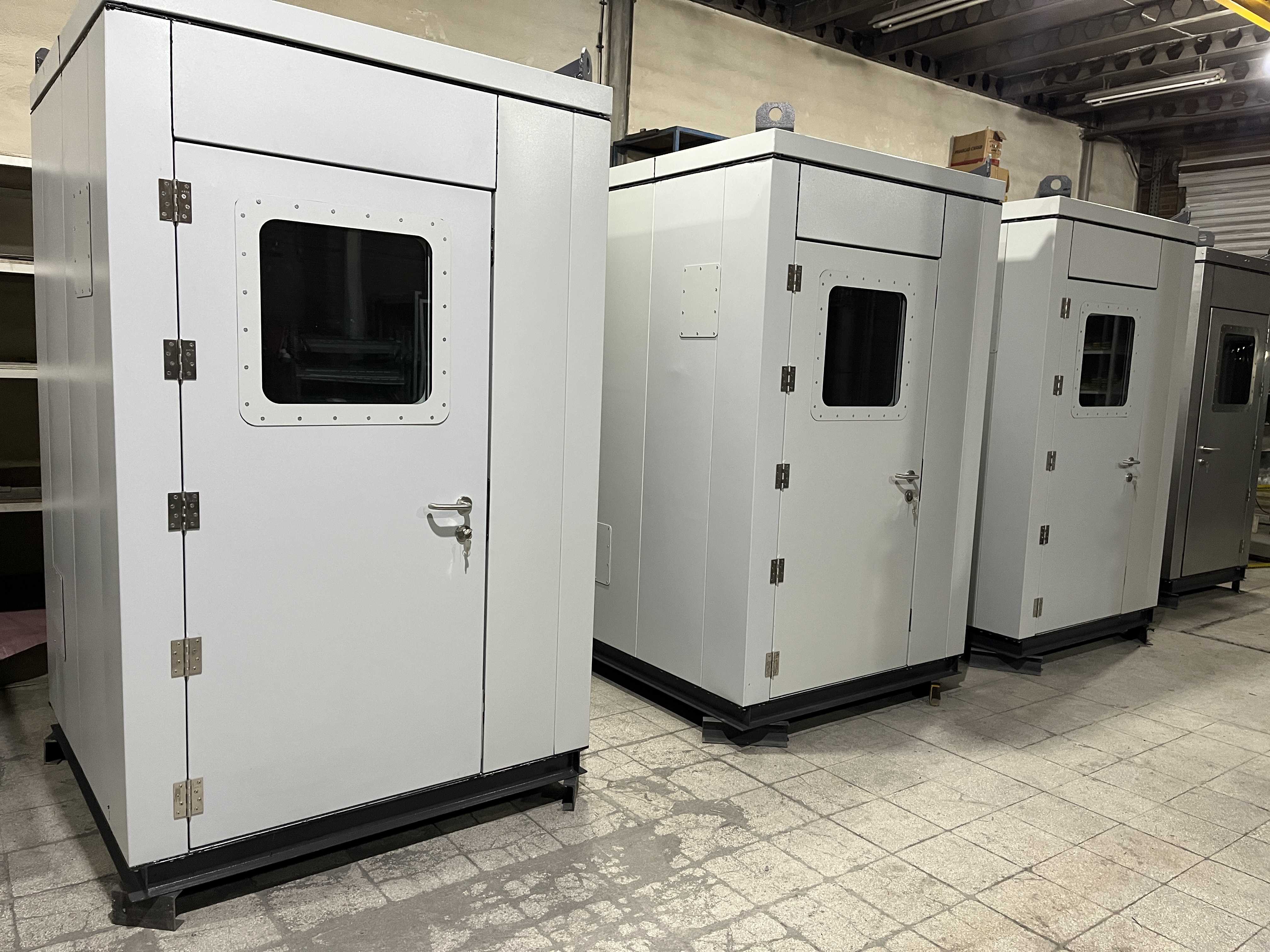
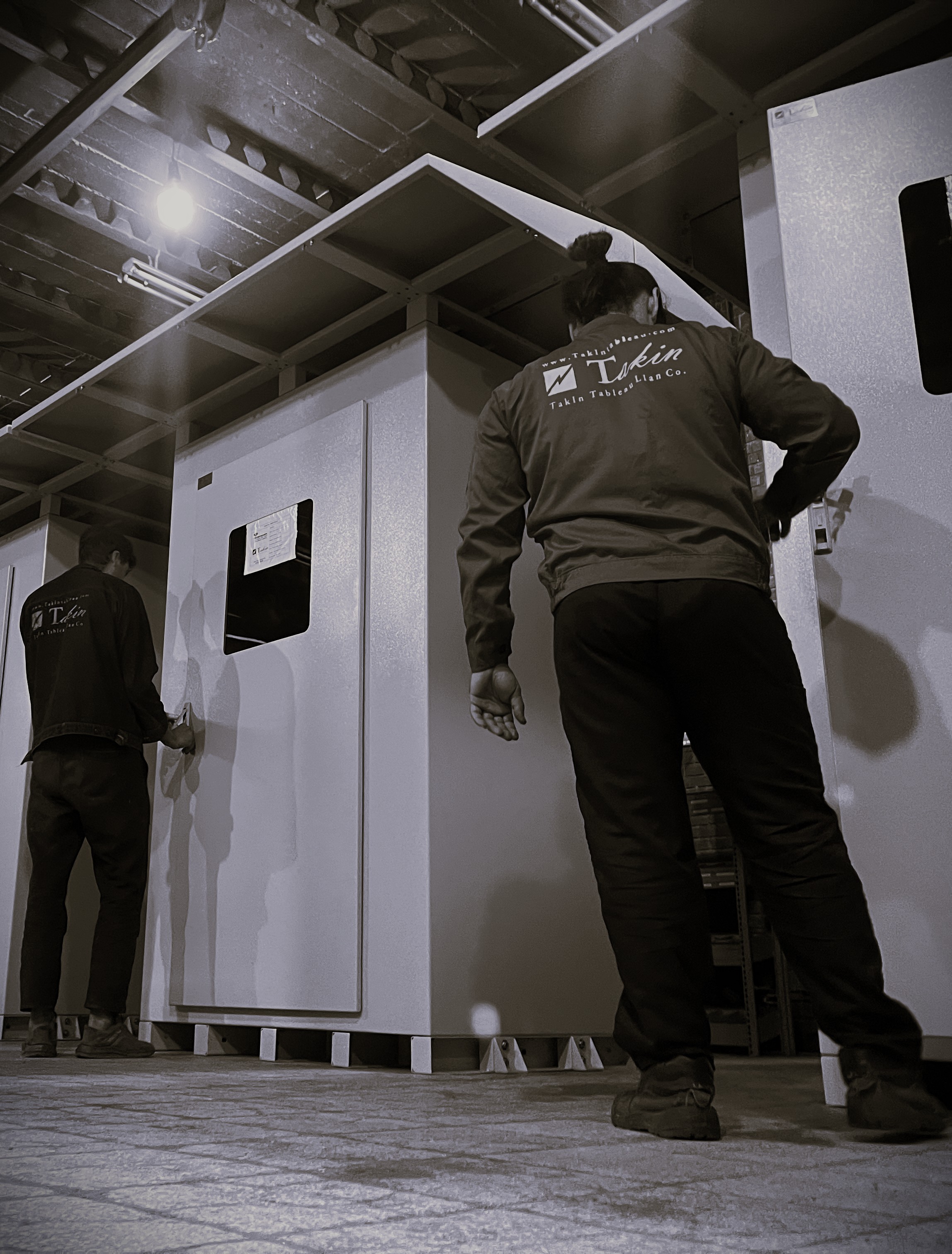
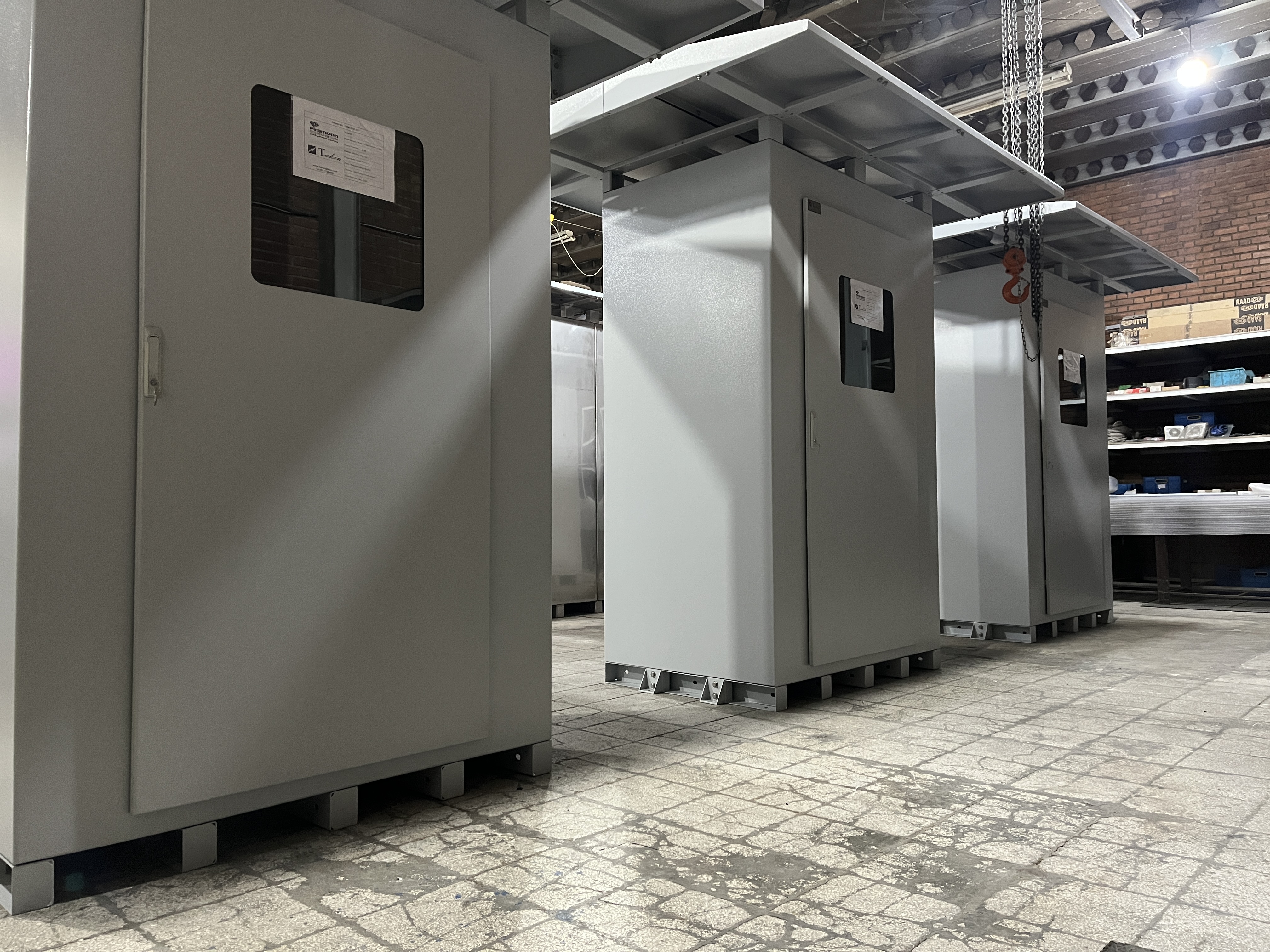
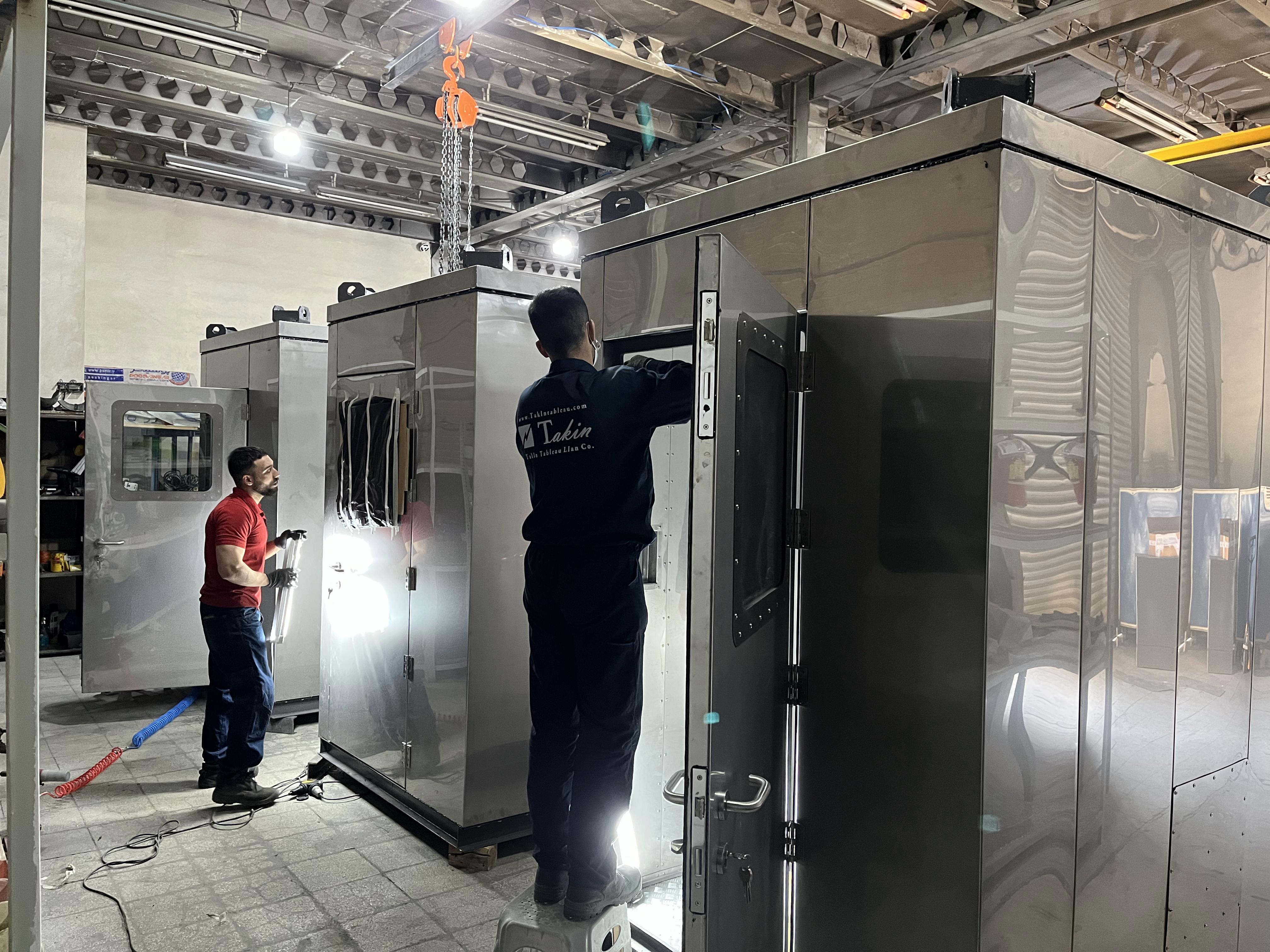
Analyzer Cabinet Images and Industrial Equipment
The following photographs provide visual context for industrial cabinet equipment. The exact function of each assembly should be confirmed from its nameplate, project documentation, and equipment specifications.
Common Types of Analyzer Cabinets
Analyzer cabinets are best classified by the measurement application, analyzer technology, and installation requirements. Common examples include:
- Gas analyzer cabinets: Used for specified gas composition or concentration measurements.
- Oxygen analyzer cabinets: Designed around an oxygen measurement application and its sample requirements.
- Moisture analyzer cabinets: Used where moisture or water content must be measured within a defined range.
- Liquid analyzer cabinets: Configured for selected liquid measurement applications and compatible sampling arrangements.
- Indoor or outdoor installations: Designed around the environmental conditions, access needs, and protection required at the installation site.
These categories are not interchangeable. The correct configuration must be established from the measurement objective, sample properties, and project requirements rather than the cabinet name alone.
Analyzer Cabinet vs. Electrical Control Cabinet
| Comparison | Analyzer Cabinet | Electrical Control Cabinet |
|---|---|---|
| Primary purpose | Process measurement and analytical instrumentation | Electrical distribution, automation, or control |
| Typical equipment | Analyzer, sample conditioning components, and interfaces | Protection devices, controllers, relays, and terminals |
| Sample handling | May be an essential design requirement | Not normally a primary function |
| Key design focus | Measurement quality, sample compatibility, and protection | Electrical safety, control performance, and maintainability |
A project may use both cabinet types. Their interfaces should be coordinated during engineering so that signals, power, alarms, communications, and maintenance access are addressed consistently.
Key Design Considerations
- Define the measurement objective: Identify the target parameter, range, accuracy, and response time.
- Understand the sample: Document composition, pressure, temperature, phase, contaminants, and any compatibility concerns.
- Design the sample path: Select suitable materials, tubing, valves, filtration, and conditioning components.
- Assess the installation environment: Consider ambient temperature, moisture, corrosion, dust, vibration, and access.
- Review safety requirements: Evaluate hazardous area classification and the applicable project and regulatory requirements.
- Plan maintenance: Provide safe access to serviceable components and define isolation and calibration procedures.
- Verify interfaces: Confirm power, signals, communications, alarms, and connections to plant systems.
Safety and Reliability
Analyzer cabinet design may involve pressurized samples, hazardous gases, hot surfaces, electrical equipment, or environmentally sensitive substances. A safe design requires a documented risk assessment and equipment selected for the actual service conditions.
- Use materials and components compatible with the process sample.
- Provide suitable isolation and pressure relief where required by the design.
- Assess leaks, sample disposal, ventilation, and exposure risks.
- Follow applicable electrical and hazardous-area requirements.
- Document inspection, calibration, maintenance, and emergency procedures.
No single enclosure rating or cabinet arrangement is appropriate for every project. The final design should be checked against the relevant standards, site classification, and approved engineering documentation.
How to Select an Analyzer Cabinet
Before specifying or purchasing an analyzer cabinet, prepare a clear technical scope. The following checklist helps identify the information that needs to be confirmed.
| Item | Information to Confirm |
|---|---|
| Measurement | Target parameter, measurement range, accuracy, and response time |
| Process sample | Composition, phase, pressure, temperature, and contaminants |
| Installation | Indoor or outdoor location, ambient conditions, and available space |
| Safety | Area classification, applicable standards, and process hazards |
| Interfaces | Power, signal types, communication protocols, and plant connections |
| Maintenance | Calibration access, spare parts, service intervals, and documentation |
Common Problems and Maintenance
Unexpected readings do not automatically mean that the analyzer has failed. A structured inspection should consider the complete sample path, the measuring instrument, utilities, and signal interfaces.
| Observed issue | Possible causes to investigate |
|---|---|
| Unstable readings | Sample flow variation, changing process conditions, leaks, or instrument issues |
| Slow response | Long sample transport time, unsuitable flow, or sample conditioning issues |
| Frequent filter blockage | Sample contamination, unsuitable filtration, or inadequate maintenance |
| No signal | Power, wiring, communications, configuration, or analyzer fault |
| Calibration drift | Calibration gas or standard issues, contamination, aging, or changing conditions |
Maintenance should follow the instrument manufacturer's instructions and the site's approved procedures. Before opening the cabinet or disconnecting sample lines, assess the process hazards and apply the required isolation and safety measures.
Frequently Asked Questions
What is an analyzer cabinet used for?
It houses analytical instruments and, where required, the sample conditioning, electrical, and environmental systems needed for industrial process measurement.
Is an analyzer cabinet the same as a control cabinet?
No. A control cabinet mainly supports electrical distribution or automation, while an analyzer cabinet focuses on analytical measurement and may include equipment for preparing process samples.
What affects analyzer cabinet design?
The analyzer technology, sample characteristics, operating conditions, installation environment, safety requirements, and maintenance strategy all influence the design.
Does every analyzer cabinet need a sample conditioning system?
Not every application uses the same arrangement. Extractive analyzers often require sample conditioning, while other measurement methods may use different configurations.
How can analyzer cabinet reliability be improved?
Start with correct application engineering, compatible components, appropriate environmental protection, safe access, and a documented inspection and calibration plan.
Conclusion
An analyzer cabinet is an application-specific engineering solution, not simply an enclosure for an instrument. Reliable performance depends on the analyzer, sample handling, installation environment, interfaces, and maintenance plan working together. Define these requirements before selecting or designing a cabinet.